Nothing here is sponsored or affiliate-linked. If that changes, it will say so at the top of the page in the same size type as everything else.
Four items, and an honest ranking at the bottom — because a shelf is much easier to buy than a habit, and only two of these are worth building one around.
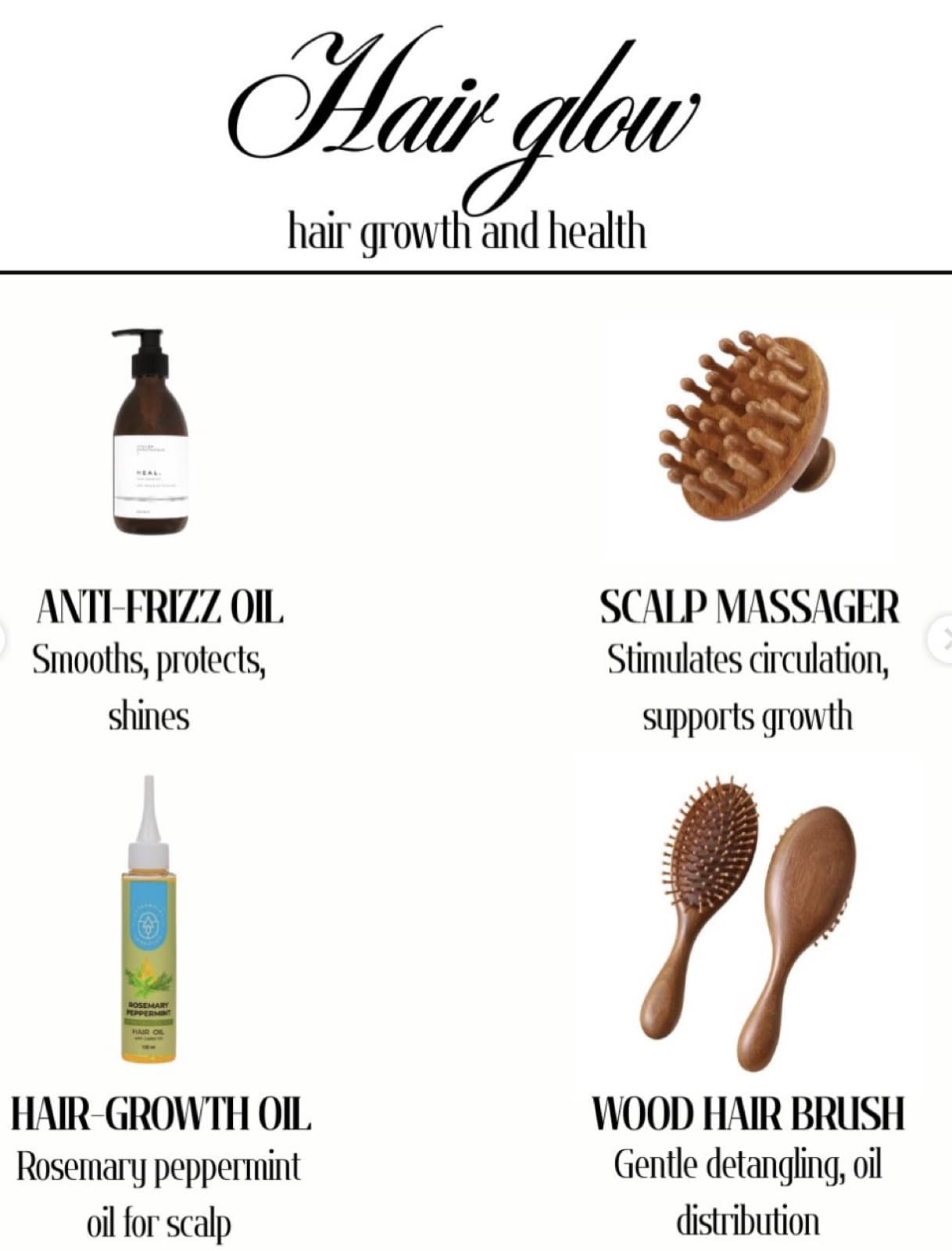
Scalp massager
Stimulates circulation, supports growth
The cheapest item and the one with the best ratio on the page.
Follicles are fed by blood supply, and mechanical stimulation increases local circulation. There's reasonable evidence that consistent scalp massage increases hair thickness over months — modest, real, and free once you own the tool.
The tool isn't strictly necessary; your fingertips do the same job. What the tool provides is that you'll actually do it, because it's pleasant. That's a legitimate reason to buy something.
Four or five minutes, in the shower or dry, most days. Firm circular pressure, moving the scalp rather than sliding over the hair. It's also, incidentally, nervous-system rest — which is doing a second job on the same problem.
Hair-growth oil — rosemary and peppermint
The one with actual evidence
Of everything on any of these shelves, rosemary oil has the most credible research behind it. A comparative trial found it performed similarly to minoxidil for androgenetic alopecia over six months, with less scalp itching.
One study is one study, and the mechanism isn't fully established — probably circulation, possibly an anti-androgenic effect. But it's a genuine result rather than a marketing claim, which makes it unusual in this category.
How to use it: diluted in a carrier oil, massaged into the scalp, left on for a period, then washed out. Two or three times a week. Never neat — essential oils on undiluted skin cause irritation, and an irritated scalp grows hair worse.
Peppermint is often paired with it and there's some animal data. Treat it as a pleasant addition rather than the active ingredient. It also produces a cooling tingle, which people read as evidence that something is happening. It isn't evidence; it's menthol.
Timeline: six months. Combined with the massager, this is the highest-value pairing here.
Anti-frizz oil
Smooths, protects, shines
Cosmetic, immediate, and does exactly what it says. Coats the hair shaft, reduces moisture exchange with humid air, adds shine.
No growth effect and it doesn't claim one. Worth owning if frizz bothers you — and in Beirut and Dubai summers, it will.
Small amount, mid-length to ends, never the scalp. Oil at the root is a different product for a different purpose, and putting a silicone-based smoothing oil there just makes your hair greasy.
Wood hair brush
Gentle detangling, oil distribution
The most underrated item, and the least exciting.
Two real functions. Gentle detangling — wide, smooth wooden bristles cause less mechanical breakage than cheap plastic with moulded seams, and mechanical breakage is a genuine cause of thinning ends that gets blamed on growth. And oil distribution — brushing moves your scalp's own sebum down the shaft, which conditions the mid-lengths for free.
Never brush wet hair with it. Wet hair stretches and snaps. Wide-tooth comb when wet, brush when dry.
The ranking
| Worth it | Why | |
|---|---|---|
| Rosemary oil | Yes | The only item here with a comparative trial behind it |
| Scalp massager | Yes | Nearly free, real mechanism, pleasant enough to keep doing |
| Wood brush | Yes | Prevents breakage, which is invisible until it isn't |
| Anti-frizz oil | If frizz bothers you | Purely cosmetic, and honest about it |
And the ranking that matters more: all four of these sit below protein, zinc, ferritin and thyroid. Products are downstream of nutrition. If you're going to spend on one thing, spend it on the bloodwork.
Where people go wrong
- Essential oil neat on the scalp. Dilute it. Irritation is counterproductive.
- Brushing wet hair. Wet hair stretches and snaps. Comb instead.
- Anti-frizz oil at the roots. Wrong product, wrong place, greasy result.
- Quitting rosemary oil at eight weeks. Six months is the timeline. It's the same delay as everything else with hair.
- Buying all four and using none consistently. Two, used for six months, beats four in a drawer.
- Reaching for products before bloodwork. No oil corrects low ferritin.
The one thing
Five minutes of scalp massage tonight, in the shower, with your fingertips.
You don't need to buy anything to start, it's the best-evidenced free intervention here, and if you're still doing it in a month, then buy the massager and the rosemary oil.